
Dragon’s Back Race® Moving to a Mandatory Route from 2026
From 2026, the Dragon’s Back Race will follow a single mandatory route. This brings clearer stewardship, supports access discussions with landowners and authorities, protects sensitive terrain, and dispels the myth that shortcuts meaningfully affect outcomes, while keeping the race every bit as serious, beautiful, and navigationally demanding as ever.
Shane Ohly, Event Director
Heading South! Dragon’s Back Race 2015 ©Ian Corless Photography
Introduction
The Dragon’s Back Race® has always asked a simple question of its competitors: can you commit to a serious journey through the mountains of Wales, day after day, with the experience, resilience and judgement to keep moving when the ground is rough, the weather turns and your resolve wavers? That core value and identity will never change. The route will remain long, technical and relentlessly beautiful. The scale of the challenge, and the outstanding beauty and pure aesthetics of the route, will remain as they are. Indeed, for most participants, their experience will remain unchanged.
Mandatory Route
From 2026, however, we are introducing one clear operational change: the Dragon’s Back Race will follow a mandatory route throughout. Competitors will be required to follow the official route between checkpoints as published. This announcement applies not only to race week but also provides clarity for the growing number of people who recce the route, hike it in their own time, or pursue Fastest Known Time (FKT) attempts.
This change is not being made lightly. It reflects how the event has evolved over ten editions since 1992, changing technology (the almost universal prevalence of GPS-enabled watches), how the route is now used by a much wider community, and the increasing scrutiny (quite rightly) placed on an organised activity in sensitive upland landscapes that continues to garner international attention and renown.
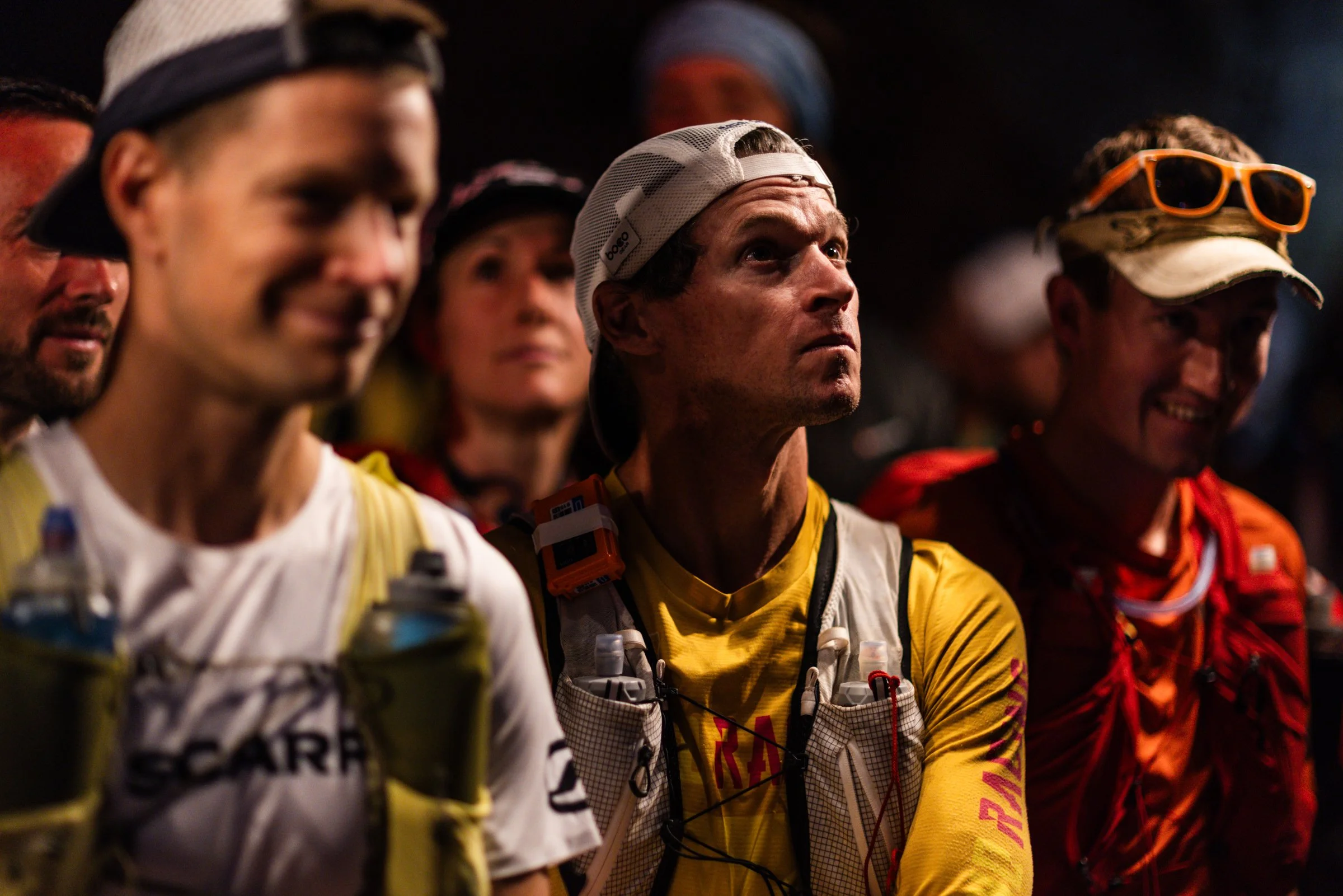
The race attracts international participants from all over the world ©No Limits Photography
Why we’re making this change now
Over the past few years, we have seen a noticeable increase in the level of attention from landowners, estate managers and statutory authorities to the Dragon’s Back Race. That scrutiny comes with a responsibility: to be able to describe, defend and manage exactly what we do, where we do it and what impact it has.
One of the persistent challenges in conversations with stakeholders has been the idea - sometimes reinforced by anecdote, internet discussion and ‘race folklore’ - that competitors can take multiple alternative lines between checkpoints. In reality, the Dragon’s Back Race has never been a free-for-all. It operates within a carefully planned framework of access agreements, permissions, consultation and environmental considerations. However, when participants (during the race or during recce visits) take alternative lines, even in small numbers, the consequences can be disproportionate. This complicates our ability to demonstrate that we are managing impact responsibly and predictably and it can undermine confidence in our planning.
A mandatory route removes ambiguity. It makes our ongoing consultations with landowners and authorities simpler, clearer and more robust. It also provides a stronger basis for protecting sensitive areas, managing cumulative impacts and ensuring the event remains sustainable for the long term.

We want to protect the beautiful landscapes we’re fortunate to run through ©No Limits Photography
The route is already ‘there’ - in more ways than one
It’s also important to recognise a reality that anyone who has spent time on the Dragon’s Back knows: after ten editions and countless recce trips, the Dragon’s Back Race has created a visible route on the ground.
For the vast majority of the course, that line follows established paths and trails, ancient tracks, mountain paths, ridgelines, forestry routes and rights of way. In some places, it is now so well established that it is becoming a recognised long-distance journey. Increasingly, we are seeing not just runners but also long-distance hikers choosing to complete the Dragon’s Back route in their own time, as a personal challenge and a multi-day crossing of Wales. That is an extraordinary legacy for the event, and something we want to steward responsibly.
By switching to a single defined route, we are aligning our rules with what, in many respects, has become the reality on the hill: one primary line that most people already follow, and which can be communicated clearly to race participants and to anyone engaging with the route as an FKT, a hike, or a personal expedition.
Clearing up the ‘shortcuts’ myth
Another reason for making this change is to challenge the pervasive belief that the Dragon’s Back can be ‘gamed’ through clever shortcuts, especially in the context of racing for podium positions, or scraping inside cut-offs.
Let’s be blunt: the few shortcuts that exist might save a few minutes here and there, but they are not meaningful in the context of the whole race. In 2025, the average finish time was 68 hours, and podium positions are usually separated by hours rather than minutes. The Dragon’s Back Race is not won (or lost) by a couple of speculative lines on a hillside. It is won through sustained execution over days: pacing, foot-care, nutrition, recovery, problem-solving, discipline and the ability to keep moving efficiently through difficult terrain.
At the same time, the idea of shortcuts creates problems. It encourages competitors to hunt for ‘faster’ lines, spreads the impact more widely across the landscape, and fuels unnecessary anxiety among runners who feel they must take risks to stay competitive or believe they are somehow disadvantaged by not knowing these shortcuts. A mandatory route removes that noise. It reinforces what the race has always been about: doing the work, staying consistent and making good decisions over a very long time.

The finish line is reached through sustained execution ©No Limits Photography
This does not reduce the navigational challenge
We also want to be absolutely clear that moving to a mandatory route does not change the navigational challenge, as some people might assume. If anything, it recognises how most competitors already navigate.
The reality is that a large proportion of runners (we estimated >95%) currently follow the route using a ‘breadcrumb trail’ on their watch or handheld device, with little or no recourse to traditional map-and-compass navigation in normal conditions. That is not a criticism; it’s simply how modern mountain running has evolved, and we design the event accordingly, with tracking, communication, safety planning and competitor expectations in mind.
But a GPX line does not make the mountains simple. It does not choose safe micro-lines through complex ground. It does not manage fatigue, poor visibility, stress, wind, rain, or the cognitive load of day three or day four. And it certainly does not replace the advantages held by an experienced and attentive navigator.
A skilled map-and-compass navigator, and/or someone who has invested time in recceing, will still have an advantage over an inexperienced navigator, particularly in poor visibility and difficult weather. That remains true whether the route is mandatory or not. When conditions deteriorate, good navigation is not about finding a theoretical shortcut; it is about making correct decisions repeatedly, staying efficient, and avoiding time-wasting errors that compound over an 8–12-hour mountain day.
So if your concern is that a mandatory route “takes away the navigational element,” that misunderstands how the event is currently navigated and where the real navigational advantage is earned. The Dragon’s Back Race will remain a serious mountain event that rewards competence, preparation, judgement and composure.

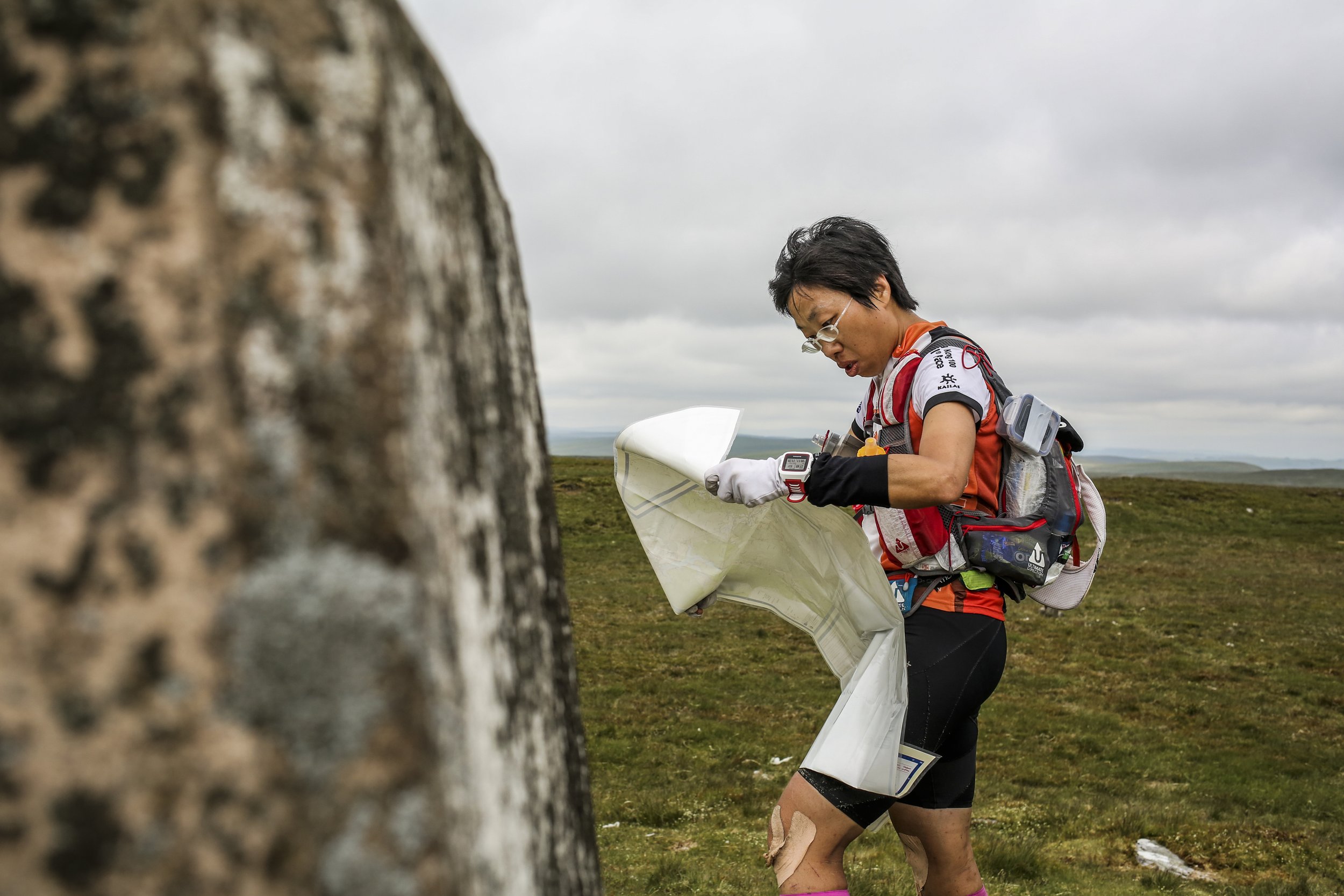
A skilled map-and-compass navigator will still have an advantage ©No Limits Photography
What will change for competitors
From 2026, competitors will be expected to follow the official route between checkpoints as described by the event. There is no material difference from the 2025 route planned at this stage. In due course, we will publish:
2026 Official GPX files
Clear guidance on what constitutes compliance and how we will deal with minor mistakes versus significant deviations
We are not introducing this change to punish honest errors. In complex mountain terrain, small mistakes happen, especially when visibility is poor. Our approach will be proportionate and fair. To be frank, the vast majority of navigational errors during the event self-penalise because of the error. What will not be acceptable is deliberate shortcutting, significant deviation for advantage, or travelling through any explicitly prohibited areas.
Clarity for the wider Dragon’s Back community
Finally, this change isn’t only about the race itself. The Dragon’s Back has grown beyond six days in September. It is now a recognised line across Wales, used by runners, hikers and FKT aspirants. That brings a need for clarity.
A single, published, mandatory route provides a consistent reference point for everyone: competitors preparing for the race, people recceing sections, those pursuing FKTs and those walking the route as a long-distance expedition. It helps us communicate expectations more clearly, reduce unintended impacts, and support ongoing positive relationships with the people and organisations who make access possible.
The same race. Clearer stewardship.
The Dragon’s Back Race will remain what it has always been: a world-class, bucket-list mountain challenge, built on raw terrain and self-reliance. The move to a mandatory route is not a softening of the event; it is an evolution in stewardship, reflecting the maturity of the race, the realities of modern navigation, and the responsibility that comes with taking people through extraordinary places.
We believe this change will strengthen the event for the long term: for participants, for landowners and authorities, and for the mountains themselves.
Ian Stewart – Course Manager & 2019 DBR finisher commented “These changes level the playing field, with all participants now clearly racing the same line, what it doesn’t do it reduce the challenge of this epic journey.”
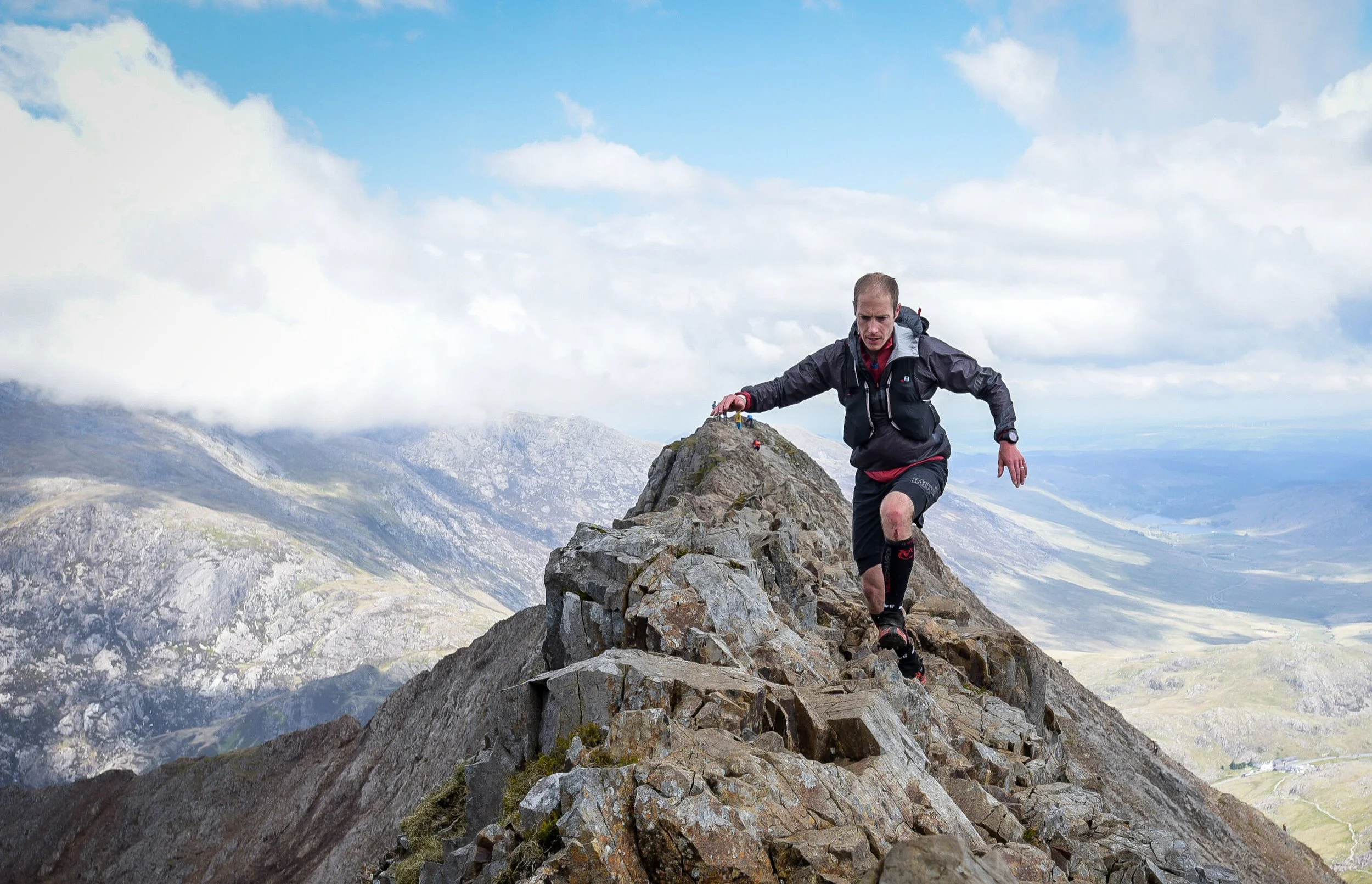
Ian Stewart on Crib Goch - 2019 ©No Limits Photography
LIMITED PLACES REMAIN FOR THE 2026 DRAGON’S BACK RACE RACE. SAY YES TO ADVENTURE AND SECURE YOUR PLACE ON THE STARTLINE…
OFFICIAL TECHNICAL RECCE EVENTS DELIVERED BY DRAGON'S BACK RACE® EVENT PARTNER RAW ADVENTURES. FIND OUT MORE BELOW.